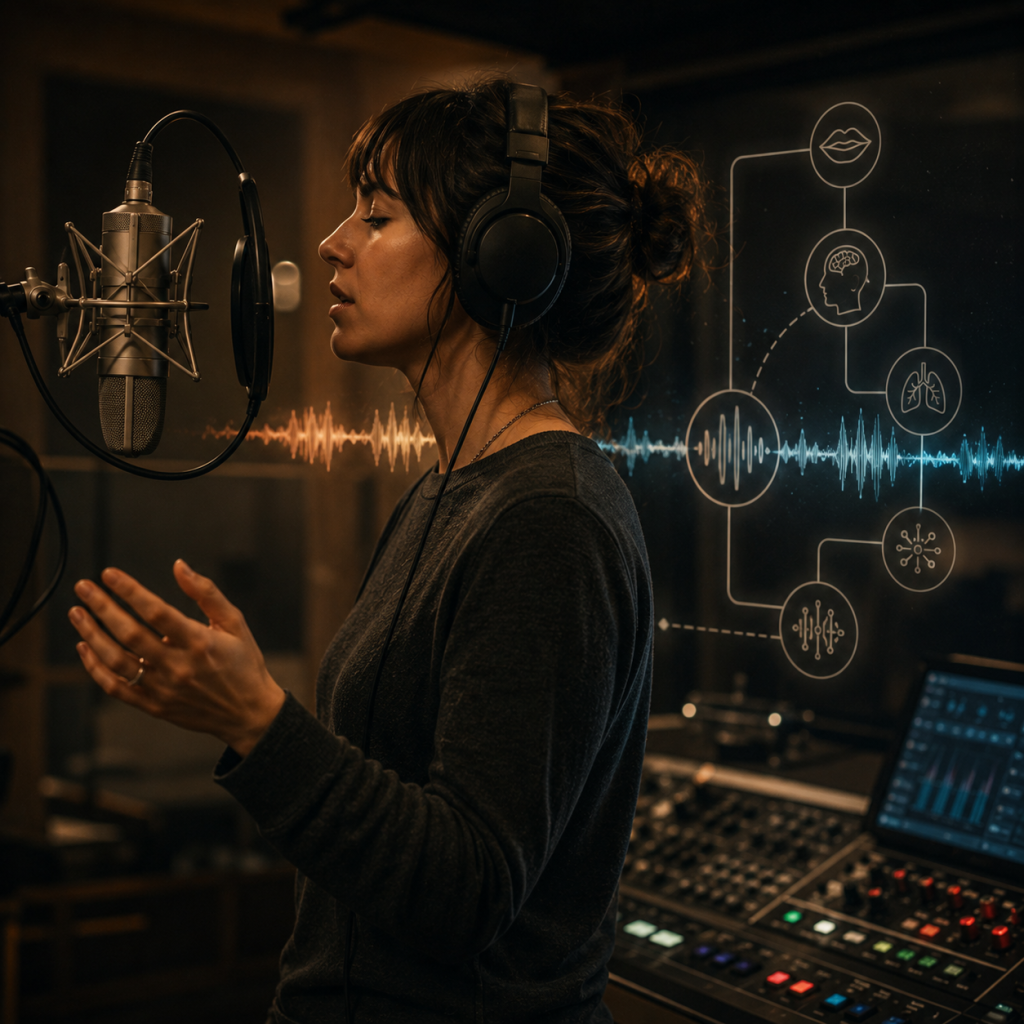
Voice gets talked about as if it were weather. A book has it or it doesn’t. The writer found it, or lost it somewhere around chapter nine, or is still hoping it will descend like grace. This is how voice is discussed in workshops and blurbs, and it is almost useless to a writer who is sitting with a draft that sounds inconsistent and needs to fix it. You cannot revise weather. You can only wait for it.
So I want to offer a more practical view, one you can actually work with: voice is not a single gifted sentence or a mood that visits you. It is a system of choices, repeated with enough consistency that the reader comes to trust the mind on the page. That trust is the whole game. When a reader stops worrying about who is telling them this story and simply sinks into the telling, the voice is working. When the reader keeps getting subtly jolted, sensing that the narrator has changed personalities between chapters, the voice is failing, and the failure is almost always a system that drifted, not a talent that evaporated.
Voice Is Made of Nameable Parts
The reason “find your voice” is such unhelpful advice is that it treats voice as one indivisible thing. It isn’t. It is an accumulation of decisions, and once you can name the decisions, you can revise them deliberately instead of waiting for inspiration.
Sentence length is part of voice; a narrator who thinks in short, hard sentences is a different presence than one who thinks in long, qualifying ones that keep circling back. Diction is part of it: the difference between a character who calls it a car and one who calls it a vehicle and one who names the make and model is a difference in who they are. So is what the narrator notices and what they conspicuously refuse to notice, which is often where character lives. So is the distance the prose keeps from feeling, whether emotion gets named outright or arrives only through behavior. So is the rhythm of the dialogue, how it breaks, how often silence is allowed to do the work a line of speech could have done and chose not to.
None of these is decorative. Together they are the texture of a particular consciousness, and the moment you can see them as choices rather than as ambient style, the whole problem of “inconsistent voice” becomes tractable. You stop asking the unanswerable question, does this sound like me, and start asking the answerable one: which of these specific patterns is shifting, and is the shift on purpose?
The Rules Are Flexible, but There Are Rules
Every manuscript teaches the reader, in its first pages, what kind of language belongs inside it. Can the narration use fragments? Can it be funny in the middle of grief, or is humor off the table here? Does it name feeling directly, or does feeling have to be inferred from a clenched jaw and a too-careful sentence? Does the narrator judge other people out loud, or withhold judgment? Does the prose allow long, winding interior thought, or does it stay clipped and external? The reader absorbs these rules without being told them, the way you learn the rules of a new acquaintance’s humor, and they begin to rely on them.
The trouble starts when the rules change without a reason. The opening is spare and disciplined; the middle goes lush and ornamental for thirty pages, then snaps back. The narrator begins with close, exact physical attention, then floats into abstraction for a chapter at a time. A book withholds interiority for fifty pages, training the reader to read behavior, and then suddenly explains every feeling on the page because the writer got nervous that the restraint wasn’t landing. None of this is necessarily visible line by line. Each individual sentence may be fine. What the reader registers is harder to name and more corrosive: the book has started to sound less like itself, and their trust quietly leaks away.
Point of View and Tense Are Part of the System
You cannot talk about voice honestly without talking about point of view, because POV decides whose language the book is even allowed to use and how much the reader is permitted to know. First person hands the sentence to a speaker with bias, memory, and the instinct to protect themselves, which means everything they tell you is colored, and that coloring is a resource. Close third keeps us near a single character while still allowing a faint pressure from outside that character’s understanding, room for the reader to see what the character can’t. A wider, more omniscient view can range across minds and decades, but it has to earn an authority the more intimate modes get for free.
Tense belongs to the system too. Present tense can lend a scene a knife’s-edge immediacy, but it makes genuine reflection awkward, because a narrator living strictly in the now has no natural vantage from which to look back. Past tense buys you hindsight and depth, the sense of a story being shaped by someone who knows how it ends, but it can soften urgency if the narration stands too far back from the events. These are not prestige decisions, and there is no ranking in which one is more literary than another. They are load-bearing craft choices, and the only real test is whether they support the relationship you want the reader to have with the story.
Write Down What the Book Allows
Here is a concrete habit that turns all of this from theory into method: extend your style sheet to cover voice, not just spelling. Most writers think of the style sheet as the copyeditor’s tool for hyphens and capitalization. For fiction it can do much more. Record the voice decisions explicitly. Does the narration use contractions or not? How is interior thought treated, italics or roman, tagged or untagged? Are sentence fragments permitted, and in what register? What recurring diction belongs to this narrator? How is dialogue patterned? Is there typography reserved for memory, or letters, or text messages? And, most usefully of all, which words does the manuscript deliberately avoid?
That document does two things at once. It lets an editor protect what is intentional, so your purposeful fragment doesn’t get tidied into a sentence by someone who couldn’t tell. And it lets you see, during revision, when a page has wandered off the system. You can hold a suspect paragraph up against the record and ask: does this still sound like the same narrative mind? Is this sentence breaking the pattern for a reason, or out of habit? Am I explaining here because explanation is genuinely right in this moment, or because the scene underneath it hasn’t done enough work and I’m covering for it?
None of this freezes the voice. A book’s language can and should shift as the story turns, tightening as the pressure rises, loosening when it breaks. The point of treating voice as a system is not to lock it down. It is the opposite. When the choices are visible, you can break them on purpose and to effect, which is a kind of freedom. It is only the accidental drift, the change you didn’t notice and can’t account for, that costs you the reader’s trust.
The goal was never a flawless voice. It was a voice the reader can trust enough to forget about, so they can give all their attention to the story underneath.
e.
Cross-links
- The Present Tense Decision – on tense as a craft choice
- POV Choice as Story Engine – on perspective as structure
- What a Line Edit Fixes – on protecting voice at sentence level